
1.3 Billion People: Designed Out of Life
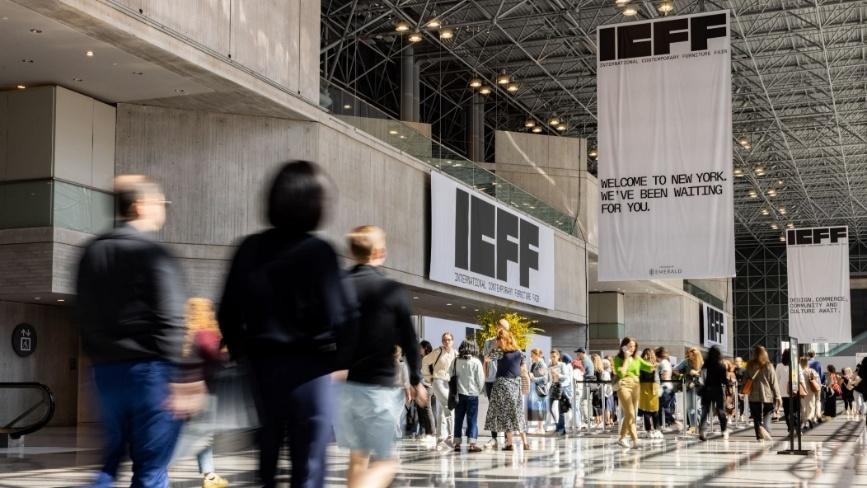
The International Contemporary Furniture Fair (ICFF) 2026, part of NYCxDESIGN, arrived at the Javits Center with its usual celebration of contemporary design. Thousands of architects, designers, manufacturers, and buyers searched for the next great chair, lighting system, textile, or material.
Neglect or Oversight
Walking the aisles, I wondered whether designers recognize that millions of people cannot use the environments they create. The evidence was everywhere: mobility devices that don’t fit through doorways, stairs where ramps should be, lighting that disorients people with sensory sensitivities, seating that excludes people with chronic pain, and layouts that assume every body moves the same way.
My conclusion: It’s a choice.
The industry sees the problem. It simply chooses aesthetics, speed, and awards over accessibility.
So the ignoring is:
- Not accidental — the barriers are obvious.
- Not fully intentional — designers aren’t setting out to exclude.
- Absolutely avoidable — the solutions exist, are documented, and are achievable.
- Functionally deliberate — because the industry repeatedly prioritizes style over human use.
In other words: It’s complicity through convenience. A refusal to change because exclusion is easier than redesigning the system.
Foreclosed
More than 1.3 billion people worldwide live with disabilities, and 28.7 percent of U.S. adults identify as disabled (Centers for Disease Control and Prevention [CDC], 2024). By 2030, aging populations across North America, Europe, and Asia will make accessibility a mainstream expectation rather than a niche concern. Inclusive design is becoming both a social and economic imperative.
Barriers Remain
At an event shaping the future of interiors, architecture, and product innovation, the absence of meaningful accessibility discourse was striking. ICFF showcased beauty and ambition while revealing a profession still designing for an imagined “ideal user” rather than the full spectrum of human bodies and minds.
Doors Closed
We all should be able to enter buildings, navigate stairs or ramps, use restrooms, hear public speeches, read printed and digital information, enter pools, walk beaches, dine in restaurants, and sit comfortably. These are not luxuries; they are basic conditions of participation.
Yet billions remain excluded because the built environment was not designed for the full range of human bodies, senses, and realities. Disability is not a niche identity; it is the world’s largest cross-cutting minority group, and anyone can become disabled at any age (Bogart & Dunn, 2019). Ableism, stereotyping, and discrimination continue to shape infrastructure, policy, and culture (Olkin, 1999, 2017).
Built Environment. Built for Whom?
ICFF 2026 revealed systemic neglect. Inaccessibility in buildings, restrooms, pedestrian infrastructure, and transportation systems creates daily barriers for people with mobility, sensory, and cognitive differences (Hammel et al., 2008; Mwaka et al., 2023). Accessibility remains inconsistent and too often treated as optional.
Digital environments frequently replicate these exclusions. Websites, communication formats, and digital tools remain inaccessible, reinforcing broader patterns of ableism (American Psychological Association [APA], 2025a). For people with sensory processing differences, online spaces can be overstimulating; for those with hearing or visual impairments, essential information is still out of reach.
These structural failures extend to education and employment. Inaccessible systems contribute to the underrepresentation of people with disabilities in scientific, academic, and professional fields (Varadaraj et al., 2021). Hiring, advancement, and leadership remain inequitable (Palmer, 2025).
Healthcare systems mirror these inequities. Barriers related to affordability, reliability, and accessible services persist (APA, 2022). Environmental triggers, including lighting, noise, and chemical exposure—and limited provider training in disability-competent care contribute to preventable disparities (APA, 2025a).
Across physical, digital, educational, employment, and healthcare systems, the pattern is the same: the world is still designed for a narrow standard of the human body and mind. Accessibility is not a feature; it is infrastructure.
Limitations, Not Barriers
Human limitations vary—seeing, hearing, walking, standing, processing sensory information, tolerating environmental triggers. Yet industries continue designing for an imaginary “perfect human.” Physical and infrastructural barriers actively produce disability by restricting participation through exclusionary design and policy (Mechkaroff et al., 2022; Ulahannan et al., 2026).
Globally, most buildings remain inaccessible; 90 percent of public transportation in low-income countries is unusable for people with mobility impairments (United Nations, 2019). Digital accessibility gaps remain widespread (WebAIM, 2023).
The consequences are severe. Excluding people with disabilities may cost countries 3–7 percent of GDP (International Labour Organization, 2020). In the U.S., disability-related exclusion results in substantial lost productivity (Kraus et al., 2018). Built environment accessibility is linked to psychosocial well-being: high-barrier environments increase distress and isolation, while universal design supports participation (Andalib et al., 2024; Heeb Desai et al., 2023).
As Steinfeld and Danford note, accessibility prevents discrimination while universal design expands the consciousness of those shaping the built environment (as cited in Grech, 2015).
ICFF and Trending Design
Against this backdrop, ICFF 2026 became an instructive case study. Accessibility was not the headline theme, but it appeared in programming, materials research, and design philosophy.
Parsons Leads
Parsons Healthy Materials Lab highlighted bio-based, non-toxic materials designed to reduce respiratory, neurological, and environmental stressors (Healthy Materials Lab, 2026). Accessibility includes air quality, chemical exposure, sensory comfort, and the ability to inhabit a space without harm.
The event’s theme, “Common Ground,” framed design as a tool for connection, dignity, and inclusion. Several exhibitors presented products that quietly advance accessible living:
- Bernhardt Design: modular seating adaptable to diverse mobility needs.
- American Standard: ADA-compliant fixtures supporting aging-in-place and accessible renovations.
- molo: lightweight partitions enabling flexible spatial boundaries.
- Zieta Studio: ultralight metal forms aligning with accessible contemporary interiors.
Missed Opportunities
Despite these contributions, ICFF did not prominently feature mobility devices, transfer systems, adaptive technologies, universal design showcases, or dedicated accessibility installations. Aesthetic accessibility remains rare; accessible products often look medical rather than designed.
Hospitality and wellness designers must ask better questions. Compliance is not the goal—dignity, comfort, and autonomy are. Treating compliance as a ceiling leaves millions excluded (American Society of Landscape Architects [ASLA], 2023).
Future Luxury Is Accessible
The next decade will force change. Accessibility is becoming a luxury standard. High-end hospitality is shifting toward inclusive luxury: seamless navigation, sensory-friendly environments, ergonomic furniture, accessible wellness programming, and non-toxic materials.
Wellness spaces will be designed for real bodies: wider pathways, slip-resistant surfaces, adjustable equipment, warm-water therapy pools, low-impact recovery zones, and accessible spa treatments. Mobility-integrated interiors—chairs that assist standing, subtle lift mechanisms, elegant grab bars—will become mainstream.
Healthy materials will be non-negotiable. Universal design will evolve into brand identity, signaling cultural commitment and competitive advantage. As Stumpf and Chadwick note, universal design succeeds when it creates beauty while mediating extremes without erasing difference (as cited in Universal Design Australia, 2019).
ICFF 2026 showed that the design world is beginning to understand accessibility, but has not embraced it with necessary urgency.
Lighting the Darkness
Designers have long asked what objects should look like. The next decade will be defined by a more important question: Who can actually use them?
•Accessibility is not an add-on.
•Accessibility is not a trend.
•Accessibility is the future of design.
References
American Psychological Association. (2022). People with disabilities: Advocating for broader access to services and equitable treatment. https://www.apa.org/topics/disabilities/access-services-equitable-treatment
American Psychological Association. (2025a). APA policy statement on disability inclusion: Combating the stigma and discrimination of ableism. https://www.apa.org/about/policy/disability-inclusion
American Society of Landscape Architects. (2023). Universal design and accessibility guidelines. https://www.asla.org
Andalib, E., Temeljotov-Salaj, A., Steinert, M., Johansen, A., Aalto, P., & Lohne, J. (2024). The interplay between the built environment, health, and well-being: A scoping review. Urban Science, 8(4), 184. https://doi.org/10.3390/urbansci8040184
Bernhardt Design. (n.d.). Neighborhood™ collection. https://www.bernhardtdesign.com
Bogart, K. R., & Dunn, D. S. (2019). Ableism: Stereotyping, prejudice, discrimination, and social oppression toward people with disabilities. In Encyclopedia of disability (2nd ed.). SAGE.
Centers for Disease Control and Prevention. (2024). Disability and health data system. https://www.cdc.gov/ncbddd/disabilityandhealth/dhds.html
Grech, S. (2015). Rethinking disability and human rights. Zed Books.
Hammel, J., Jones, R., Smith, J., Sanford, J., Bodine, C., & Johnson, M. (2008). Environmental barriers and supports to the health, function, and participation of people with developmental and intellectual disabilities. Disability and Health Journal, 1(3), 143–149. https://doi.org/10.1016/j.dhjo.2008.05.001
Healthy Materials Lab. (2026). Material health and design innovation. https://healthymaterialslab.org
Heeb Desai, R., Hamlin, E., Eyler, A., Putnam, M., Stark, S., Doering, M., & Morgan, K. (2023). The role of the built environment in the community participation of adults aging with long-term physical disabilities. Journal of Aging and Environment, 38(3), 232–256. https://doi.org/10.1080/26892618.2023.2175099
International Labour Organization. (2020). Inclusion of people with disabilities in employment. https://www.ilo.org
Kraus, L., Lauer, E., Coleman, R., & Houtenville, A. (2018). 2018 annual disability statistics compendium. https://disabilitycompendium.org
molo. (n.d.). Softwall + softblock collection. https://www.molodesign.com
Mechkaroff, N., Kaushik, S., & Jackson, M. A. (2022). Re-framing built environment practice: Towards an accessible city. The Journal of Public Space, 7(2), 165–182. https://doi.org/10.32891/jps.v7i2.1491
Mwaka, C. R., et al. (2023). Public transport accessibility for people with disabilities. Frontiers in Rehabilitation Sciences. https://doi.org/10.3389/fresc.2023.1336514
Olkin, R. (1999). What psychotherapists should know about disability. Guilford Press.
Olkin, R. (2017). What psychotherapists should know about disability (2nd ed.). Guilford Press.
Palmer, C. (2025, April 1). Beyond good intentions: Overcoming barriers for researchers with a disability. https://www.apa.org/topics/disabilities/researchers-overcoming-barriers
Ulahannan, A., et al. (2026). A critical narrative review of urban built environment barriers affecting people with mobility and vision disabilities. Transport Reviews, 1–25. https://doi.org/10.1080/01441647.2026.2677170
United Nations. (2019). World disability report: Disability, inclusion and development. https://www.un.org/development/desa/disabilities/resources/world-disability-report.html
Universal Design Australia. (2019). Quotable quotes on universal design. https://universaldesignaustralia.net.au/quotable-quotes-on-universal-design/
Varadaraj, V., et al. (2021). Disability inclusion in academic and scientific fields. Journal of Higher Education Policy and Management. (Original URL not provided.)
WebAIM. (2023). WebAIM million report: Accessibility of the top 1,000,000 home pages. https://webaim.org/projects/million/
Zieta Studio. (n.d.). FiDU technology. https://www.zieta.pl
© 2026 Dr. Elinor Garely / InMyPersonalOpinion.Life . This work is protected in full under U.S. and international copyright law, including the Digital Millennium Copyright Act (DMCA).
All rights strictly reserved. Any unauthorized reproduction, republication, redistribution, adaptation, extraction, or use in AI training datasets constitutes a violation of federal and international law and will be pursued accordingly. Only brief, non-substantive quotations are permitted, and only with full attribution and an active link to the original publication. For licensing or permissions, contact: EG@InMyPersonalOpinion.Life
000