
Dr. Elinor Garely
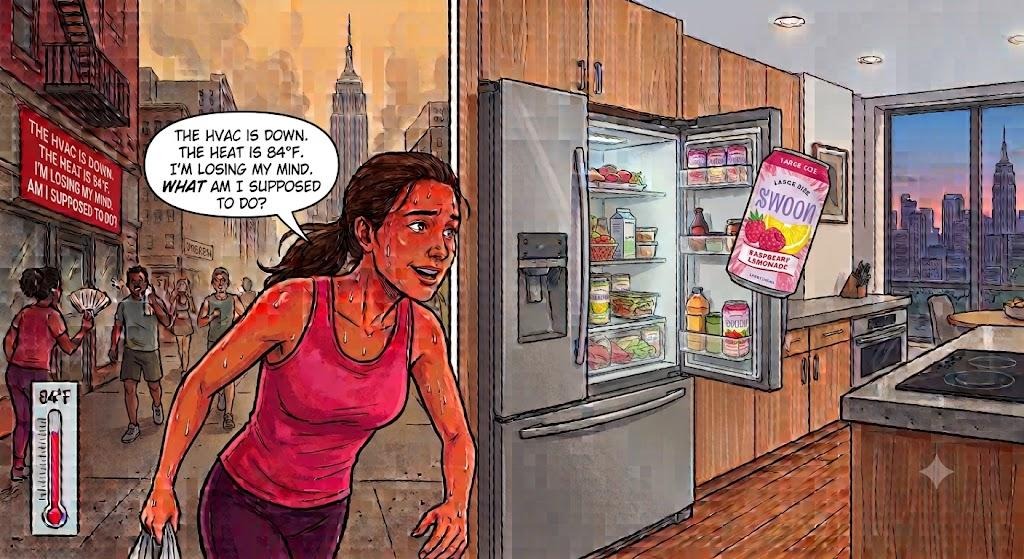
Manhattan, July 2026…The HVAC at my Manhattan Upper East Side gym finally surrendered—eighty-four degrees of stagnant air mixed with Canadian wildfire smoke. Gym rats moved through the room like participants in a failed science experiment. I did what any rational New Yorker would do: I left.
Back home, I reached for a chilled can of SWOON Raspberry Tea. One sip of cold, crisp, zero-sugar relief cut through the city’s heat and haze.
SWOON is not the story. It is the signal.
Morphing of an Industry
Across the global beverage landscape, sweetness is being redesigned. The industry—valued at USD $1.72 trillion in 2025 and projected to reach $2.02 trillion by 2034 (Deep Market Insights, 2026)—is shifting away from sugar-heavy formulations toward reduced-sugar, alternative sweeteners, functional ingredients, and wellness-aligned products.
The question is no longer How do we sell more sweetness? It is How do we deliver sweetness in a world increasingly concerned about sugar?
The Beverage Shift: From Sugar to Wellness
Consumers are not rejecting pleasure; they are rejecting the health penalties historically attached to it. Research links high consumption of sugar-sweetened beverages (SSBs) with obesity, type 2 diabetes, cardiovascular disease, and metabolic dysfunction (Malik & Hu, 2022). Liquid sugars absorb quickly and provide low satiety—an efficient recipe for excess.
The World Health Organization recommends reducing free sugar intake to <10% of daily energy, with additional benefits below 5% (WHO, 2015). The marketplace has responded accordingly.
Younger Consumers and Beverage Substitution
Younger generations evaluate beverages through multiple lenses: ingredients, perceived health benefits, sustainability, and alignment with personal values (International Food Information Council, 2023). Their preferences are reshaping categories:
- reduced-sugar beverages
- functional drinks (vitamins, minerals, probiotics, adaptogens)
- non-alcoholic alternatives
- premium hydration products
The same trend is visible in alcohol: younger adults drink less, driven by wellness culture and shifting social norms (Keyes et al., 2019). Less excess. More intention.
The Architecture of Disruption: SWOON’s Origin
SWOON was founded by Cristina Ros Blankfein and Jennifer Ross, both Harvard MBAs, who refused to accept that “healthy” must mean “joyless.” Their frustration was simple: indulgent beverages relied on added sugar, while “healthy” options often tasted terrible.
Their solution was not to eliminate sweetness—it was to redesign it.
The Mojito Catalyst
The spark came during a mojito-making moment in graduate school. As Ross boiled a cup of white sugar into simple syrup, Blankfein froze—staring at the sugar and then at Ross, who has lived with Type 1 diabetes since childhood. That flash of conscience became SWOON’s origin story.
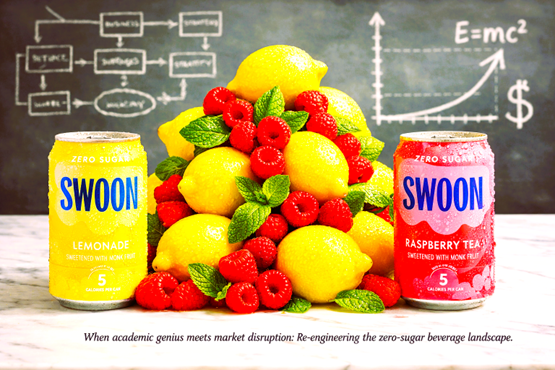
They began with zero-sugar simple syrup, then expanded into lemonades, teas, and a full beverage line headquartered in Midtown Manhattan.
Monk Fruit: The Sweetener with a Backstory
To solve the sugar problem, SWOON turned to monk fruit (Siraitia grosvenorii)—a Southeast Asian melon rich in mogrosides, the compounds responsible for its intense natural sweetness. Certain monk fruit extracts are recognized by the FDA as Generally Recognized as Safe (GRAS) (U.S. Food and Drug Administration, 2010).
WHO’s 2022 review notes that evidence on non-sugar sweeteners remains mixed and must be interpreted within broader dietary patterns (WHO, 2022). The advantage will not come from removing sugar alone, it will come from convincing consumers that the replacement is better.
Monk fruit positioned SWOON within the rapidly expanding global functional beverage category, projected to exceed USD $1.2 trillion by 2030 (Grand View Research, 2024).
The Health Reckoning
Sugar has long been central to beverage economics—cheap, familiar, and effective. But science has shifted. High intake of sugary beverages is associated with cardiometabolic disease (Malik & Hu, 2022) and, in some analyses, increased cancer risk (Jin et al., 2020), though associations do not establish causation.
The takeaway is clear: excessive sugar contributes to metabolic stress, inflammation, and chronic disease risk. Consumers have noticed.
A Crowded Market: Strategy and the New Beverage Consumer
Emerging beverage brands face a brutally competitive landscape. Taste remains the ultimate test.
Consumers may care about wellness, sustainability, and ingredient transparency, but repeat purchases depend on:
- flavor
- convenience
- availability
- emotional connection
The modern beverage is no longer just refreshment—it is identity.
Consumers increasingly ask:
- Does this fit my health goals?
- Do I understand the ingredients?
- Does it align with my values?
- Does it still taste good?
A beverage that answers only one of these questions will not survive.
Removing Sugar Is Not Enough
Early reduced-sugar beverages failed because they tasted inferior. Sugar contributes to mouthfeel, flavor balance, and satisfaction. Reformulation requires sensory science, ingredient innovation, and consumer insight. Brands are not searching for sweetness. They are searching for sweetness consumers will accept.
Packaging: Aluminum, Sustainability, and Perception
Aluminum cans are lightweight, protective, and highly recyclable and have become part of beverage strategy. They are among the most recycled consumer packaging products in the U.S. (Aluminum Association, 2024). Consumers evaluate not only what is inside the container, but what the container represents. No packaging system is impact-free. Aluminum works only when recycling systems work.
Standing Out in a Crowded Market
SWOON’s differentiation is clear:
- nostalgia-driven flavors (lemonade, sweet tea, raspberry tea)
- zero sugar
- monk fruit instead of artificial sweeteners
- a clean, modern brand identity
While giants like Coca-Cola Zero Sugar and Pepsi Zero rely on artificial sweeteners, and newcomers like Poppi, Olipop, Spindrift, and Hint chase novelty, SWOON leans into emotional familiarity, without the sugar baggage.
Along Comes Barbie
The brand’s cultural moment arrived with the official Barbie Pink Lemonade partnership, proving that a zero-sugar beverage can become a pop-culture phenomenon (Mintel, 2024).
Professional and Academic Backing
Registered dietitians and nutrition researchers highlight monk fruit’s favorable profile: clean taste, zero glycemic impact, and regulatory acceptance (FDA, 2010; WHO, 2022). College students, fitness communities, and households reducing sugar intake have amplified SWOON’s growth through social media and word-of-mouth enthusiasm.
Structured for Growth
SWOON is a privately held, founder-led enterprise supported by early-stage investment from private family funds and strategic angel investors. Its multi-channel model includes:
- direct-to-consumer online sales
- subscription programs
- retail distribution (Whole Foods, Target, Wegmans, specialty markets)
- foodservice partnerships (cafés, fitness studios, boutique hotels)
By 2024, SWOON had sold just under 10 million cans and reached eight-figure annual revenue—a significant milestone for a zero-sugar beverage startup.
InMyPersonalOpinion
When the temperature rises and the market shifts, a chilled can of zero-sugar tea may seem like a small gesture. It isn’t. It is the quiet but unmistakable marker of a global reset.
For decades, sweetness was engineered around sugar, an unquestioned ingredient, a cultural reflex. Now, consumers are rewriting the rules. They want pleasure that doesn’t punish, flavor that doesn’t compromise, and science that doesn’t hide behind marketing gloss.
The next generation of beverage winners will be the brands that understand this new consumer: someone who wants the cool hit of refreshment without the metabolic baggage, someone who wants indulgence that fits a longer life, someone who expects transparency and taste in the same sip. In the final inning, flavor wins—and sugar, at long last, loses its grip on the game and flavor wins.
References
Aluminum Association. (2024). Aluminum beverage can recycling and sustainability. https://www.aluminum.org
Deep Market Insights. (2026). Global beverage market size & outlook, 2026–2034. https://www.deepmarketinsights.com
Granato, D., et al. (2020). Functional beverages and consumer perception. Grand View Research. https://www.grandviewresearch.com
International Food Information Council. (2023). 2023 Food & Health Survey. https://foodinsight.org/2023-food-and-health-survey
Jin, X., et al. (2020). Sugar-sweetened beverages and cancer risk: A systematic review and meta-analysis of prospective cohort studies. European Journal of Nutrition, 59, 3465–3478. https://doi.org/10.1007/s00394-020-02265-8
Keyes, K. M., et al. (2019). Is there a recent epidemic of women’s drinking? A critical review of national studies. Alcoholism: Clinical and Experimental Research, 43(7), 1344–1359. https://doi.org/10.1111/acer.14067
Malik, V. S., & Hu, F. B. (2022). The role of dietary patterns, foods and nutrients in prevention and control of obesity. Circulation Research, 126(2), 233–249. https://www.ahajournals.org/journal/res
Mintel. (2024). Barbie brand partnerships report. https://www.mintel.com
Ross, J., & Blankfein, C. (2023). Founder interviews. https://www.swoon.com
SWOON. (2024). About SWOON. https://www.swoon.com
U.S. Food and Drug Administration. (2010). GRAS Notice Inventory: Monk fruit extract (Siraitia grosvenorii). https://www.fda.gov/food/generally-recognized-safe-gras/gras-notice-inventory
World Health Organization. (2015). Guideline: Sugars intake for adults and children. https://www.who.int/publications/i/item/9789241549028
World Health Organization. (2022). Health effects of non-sugar sweeteners: A systematic review and meta-analysis. https://www.who.int/publications/i/item/9789240046429
© 2026 Dr. Elinor Garely / InMyPersonalOpinion.Life Protected by U.S. & international copyright + DMCA. No reproduction, reposting, redistribution, adaptation, or AI training allowed. Brief quotes only with full credit + link.
000