
Why “from Catalonia” is not enough. What actually sells the bottle.
By Dr. Elinor Garely | InMyPersonalOpinion.Life
I arrived late to a Catalan wine master class in Manhattan. The room was packed. Vineyard slides filled the screen. No wine was poured and I continue to wonder why this important element in a master class had been deleted.
Follow the Wines
When the session ended, everyone climbed a steep, narrow staircase to taste. I struggled up the stairs and edged my way to the tables laden with regional wines. Unsurprisingly, the wines were fine, and I sipped and spat my way through the crowded space. Catalan wines are celebrated for their strong sense of place, indigenous grapes, world-class Cava, powerful Priorat reds, and distinctive whites.
The Primary Query
As I left the tasting, and thought about the event, one question lingered: Why Catalonia? Not why Catalonia for wine production. The more consequential question is why an American buyer, retailer, sommelier, or consumer should choose a Catalan wine over the countless alternatives competing for attention and shelf and table space. Success in the U.S. market depends less on making great wine than on communicating a memorable reason to buy it. The producers who succeed will be those who transform heritage, place, and authenticity into a story that buyers can quickly grasp and confidently tell.
The Market Reality
Through November 2024, the United States was the top export destination for Catalan wine: €78.82 million, about 12.7% of Catalan wine export sales (Rodon, 2025). In 2025, DO Cava sales fell 12.88% worldwide, and sales in the United States fell 18.42% (Consell Regulador de la D.O. Cava, 2026). The regulator attributed the overall decline primarily to drought-related supply constraints, not falling demand. Separately, tariff uncertainty added pressure for U.S. importers; reporting in February documented the threat and industry concern, rather than a measured tariff effect on Cava’s 2025 sales (Rodon, 2025). DO Cava is a Spanish appellation, though most Cava is made in Catalonia, so its numbers are a useful, if imperfect, proxy for the region.
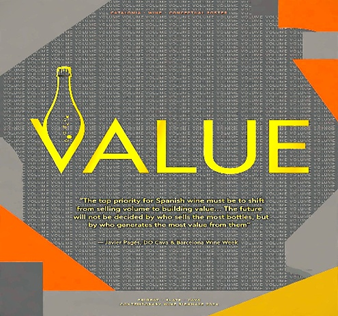
What held up matters more than what fell. The higher-tier Cavas de Guarda Superior (Reserva, Gran Reserva, and Paraje Calificado) rose 1.41% as a group. Gran Reserva grew 6.09%, and single-vineyard Paraje Calificado, from a very small base, grew 82.35% (Consell Regulador de la D.O. Cava, 2026). Organic Cava was already climbing, with sales up 15.24% in 2024 (Consell Regulador de la D.O. Cava, 2025). Since 2025, all Guarda Superior Cavas released to market are required to be 100% organic, following the category’s transition to certified-organic vineyards. Javier Pagés, outgoing president of DO Cava and Barcelona Wine Week, has been blunt: “The top priority for Spanish wine must be to shift from selling volume to building value… The future will not be decided by who sells the most bottles, but by who generates the most value from them” (Pagés, 2026). He adds that great appellations build value through identity, differentiation, and consistency over time.
Peer-reviewed research points in the same direction. A hedonic price study of Spanish quality wines in the U.S. market, published in the Spanish Journal of Agricultural Research by researchers including Isabel Bardají (Universidad Politécnica de Madrid) and Belén Iráizoz (Universidad Pública de Navarra), found aging to be the most influential factor in price. U.S. consumers also valued expert ratings, especially in upper price categories, and the smallest wineries and geographic origin helped explain preferences. Red wines were rated highest on color, although color was the weakest driver of purchase decisions (Areta et al., 2017). Separate work on Spanish wineries finds that horizontal networks, and to a lesser degree downstream vertical networks, improve export performance (Ferrer et al., 2021), and that management capabilities and sustainability orientation are among the factors most associated with business growth (Ferrer et al., 2023). In Priorat, a case study in Wine Economics and Policy showed that bonding and bridging social capital together stimulated innovation during the region’s renaissance around the turn of the millennium (Fernández Aldecua et al., 2017).
My reading is practical. Volume is fragile under shocks. Value is more durable when the wine has a clear reason to cost more: aging, organic certification, a distinctive site, or a producer someone can name. “From Catalonia” is the weakest claim. “30 months on the lees, certified organic, mountain site” is a sales tool.
What Each Buyer Needs
- Importers want fit, price, logistics, and continuity.
- Sommeliers want a wine that fits food and a glass-pour list, plus a two-sentence story.
- Retailers need a bottle they can explain in under thirty seconds on a busy floor. One concrete fact beats a paragraph of history.
- Consumers, especially Millennials, now the largest U.S. wine-drinking cohort at 31% of wine drinkers (Vinetur, 2025), are also described as budget-conscious and value-driven, and many reach for Prosecco. That is exactly why a clear reason to pay more matters. In my observation, they respond to organic, estate-driven, and place-specific narratives. They want something alive: a place, a family choice, a wine worth seeking out again.
Cava: The Useful Split
Entry-level Guarda fights a price war with Prosecco and usually loses. Longer-aged, organic Cava plays a different game, one Catalonia is equipped to win.
Table 1
Cava Category Performance, 2025
| Category | Minimum aging | Bottles, 2025 | Change vs. 2024 |
|---|---|---|---|
| Guarda | 9 months | 167,301,000 | −14.52% |
| Reserva | 18 months | 18,463,000 | +0.32% |
| Gran Reserva | 30 months | 4,215,000 | +6.09% |
| Paraje Calificado | 36 months | 31,000 | +82.35% |
| Total DO Cava | — | 190,010,000 | −12.88% |
Note. Data from Consell Regulador de la D.O. Cava (2026). Reserva, Gran Reserva, and Paraje Calificado together make up Guarda Superior, which grew 1.41% and became 100% organic in 2025. The Paraje Calificado bottle count is shown separately; all four category counts sum to the reported total. Figures cover all DO Cava, not Catalonia alone.
Producers Worth Knowing (Alphabetical)
These vineyards were at the event. This is not a ranking, only a starting point. Confirm U.S. availability and let each producer’s own angle lead.
Table 2
| Producer | Area / DO | Angle to Develop |
| Castell d’Age | Penedès | Family winery; organic and biodynamic positioning. |
| Castell d’Encús | Costers del Segre | Mountain viticulture; fermentation in rock-carved vats. |
| Celler Balart | Terra Alta | Family producer, Gandesa; Garnatxa and Carinyena. |
| Eudald Massana Noya | Penedès | Multigenerational estate; vineyard stewardship and visitors. |
| Ferré i Catasús | Penedès | Organic wines and Cava; contemporary Catalan branding. |
| Gratavinum | Priorat | Priorat project linked to the Cusiné family network. |
| Lagravera | Costers del Segre | Former gravel-extraction landscape reimagined as vineyard. |
| Marco Abella | Priorat | Parcel-by-parcel winemaking; gravity-based cellar. |
| Mas Rodó | Penedès | Mountain estate, Mediona, ~500 m elevation. |
| Mastinell | Penedès | Winery-hotel model; hospitality and place as introduction. |
| Molí Parellada | Penedès | Family Cava house; owner-winemaker production story. |
| Parés Baltà | Penedès | Organic and biodynamic wines and sparkling wines. |
What Actually Moves the Bottle
For shops, restaurants, and anyone selling to the public, the moves are operational.
- Stop treating “Spain” as one shelf. Carve out Catalonia, or Priorat and Penedès. Give the wines a place to be seen as distinct.
- Lead with one fact. “Organic, 30 months on the lees.” “Fermented in vats carved into the rock.” Staff should say it while pulling the bottle.
- Put premium Cava where it belongs. Next to mid-priced Champagne or grower sparkling, not buried with the cheapest bubbles.
- Create small, repeatable discovery. A three-wine Catalan flight once a month. One staff pick in the newsletter. Consistency beats one big event.
- Demand a usable story from the importer. If the only claim is “from Catalonia,” push back.
The Point
Catalonia does not need one grand regional story that makes every winery sound the same. It needs clear, individual reasons for the right people to pick the right bottle. The research shows what American buyers value: aging, expert ratings, small-estate identity, and a recognized place. It also links sustainability orientation and management capability to winery growth. The remaining work is short and practical: choose the angle, make it usable on a busy floor, and repeat it until the buyer can repeat it back. This is how regional wines stop hiding in plain sight.
References
Areta, Á., Bardají, I., & Iráizoz, B. (2017). Spanish wines in the US market: What attributes do US consumers look for in Spanish wines? Spanish Journal of Agricultural Research, 15(4), Article e0120. https://doi.org/10.5424/sjar/2017154-10006
Castell d’Encús. (2025). Acusp 2021 [Technical sheet].
Consell Regulador de la D.O. Cava. (2025, March 25). CAVA confronts product shortage by revaluing its sales [Press release]. https://www.cava.wine/en/news-articles/cava-do-confronts-product-shortage-by-revaluing-its-sales/
Consell Regulador de la D.O. Cava. (2026). Global report 2025. https://www.cava.wine/documents/707/WEB_Summary_Global_Report_2025_DO_CAVA_ENG.pdf
Fernández Aldecua, M. J., Vaillant, Y., Lafuente, E., & Moreno Gómez, J. (2017). The renaissance of a local wine industry: The relevance of social capital for business innovation in DOQ El Priorat, Catalonia. Wine Economics and Policy, 6(2), 136–145. https://doi.org/10.1016/j.wep.2017.10.001
Ferrer, J. R., Abella-Garcés, S., & Serrano, R. (2021). Vertical and horizontal networks and export performance in the Spanish wine industry. Journal of Wine Economics, 16(4), 400–410. https://doi.org/10.1017/jwe.2021.35
Ferrer, J. R., García-Cortijo, M. C., Pinilla, V., Castillo-Valero, J. S., & Serrano, R. (2023). Sustainability and growth: Evidence from Spanish wine industry. Spanish Journal of Agricultural Research, 21(2), Article e0104. https://doi.org/10.5424/sjar/2023212-20241
Pagés, J. (2026). “The top priority for Spanish wine must be to shift from selling volume to building value” [Interview]. Select US Wines. https://www.selectuswines.com/en/javier-pages-president-of-barcelona-wine-week-bww/4648
Penedès Turisme. (n.d.). Cava & Hotel Mastinell. https://www.penedesturisme.cat/en/wine-route/accommodation/cava-hotel-mastinell
Rodon, R. (2025, February 22). Importadores de vino catalán en EE.UU.: “Si Trump implanta los aranceles, nos puede hundir” [Catalan wine importers in the U.S.: “If Trump imposes tariffs, it could sink us”]. Ara. https://es.ara.cat/comer/importadores-vino-catalan-ee-uu-trump-implanta-aranceles-hundir_1_5293195.html
Vinetur. (2025, November 27). Millennials now make up 31% of U.S. wine drinkers as Baby Boomer share falls to 26%. https://vinetur.com/en/2025112793763/millennials-now-make-up-31-of-us-wine-drinkers-as-baby-boomer-share-falls-to-26.html
Vinissimus. (n.d.). Celler Balart. https://www.vinissimus.com/es/bodega/celler-balart/
Copyright © 2026 Dr. Elinor Garely and InMyPersonalOpinion.Life. All rights reserved under U.S. and international copyright laws. Unauthorized reproduction, distribution, or transmission, including digital republication, translation, or commercial use, is strictly prohibited without prior written consent. Brief quotations in scholarly, journalistic, or critical reviews are permitted with full attribution and a direct link to the original source. For syndication, licensing, or permission inquiries, contact EG@InMyPersonalOpinion.Life.
000